roofers
How Much Does Roof Replacement Cost in Boston, MA? (2026) Shingle, Slate, and Flat Roof Pricing
Boston, MA roof replacement costs in 2026: asphalt, slate, and flat roof pricing per square, ice dam code rules, historic review, and how to compare bids.
In This Article
How Much Does Roof Replacement Cost in Boston, MA? (2026) Shingle, Slate, and Flat Roof Pricing
Replacing an asphalt shingle roof on a Boston, MA home costs $12,000 to $26,000 in 2026 for a typical 1,800 square foot roof surface. Slate and copper work runs several times higher, and the rubber membrane roofs on the city's triple-deckers price on a different scale entirely.
Roofers quote in squares, where one square equals 100 square feet of roof surface. Architectural asphalt installed in the Boston market lands at $650 to $1,150 per square once tear-off, disposal, underlayment, flashing, and labor are counted. The wide range is real, and it comes down to what is under the old shingles and how hard the building is to reach.
Boston adds three cost factors most of the country does not deal with at once: heavy snow load, freeze-thaw cycling that manufactures ice dams, and a building inventory where a third of the housing predates 1940. A roof here is a water management system, not a covering.
Pricing by Roofing Material
Architectural asphalt shingles are the default on most Boston-area homes, and a 30-year or lifetime-rated product installed with new underlayment and flashing runs $12,000 to $26,000 on an average house. Three-tab shingles cost less at $9,000 to $16,000, and almost nobody in this climate should buy them anymore given the wind exposure along the coast.
Slate is the Boston material with the longest track record, and it is priced accordingly. A full slate replacement on a Beacon Hill, Back Bay, or Jamaica Plain home runs $40,000 to $110,000 depending on roof complexity, and the labor is specialized enough that only a handful of area crews do it properly. A slate repair and reset, replacing broken tiles and failing flashing, is far more common at $2,500 to $12,000.
Synthetic slate and composite tile sit in between at $22,000 to $45,000 and satisfy a lot of homeowners who want the look without the structural weight. Standing seam metal runs $28,000 to $60,000 and performs well against ice dams because it sheds snow.
Copper shows up as flashing, valleys, and bay window caps more often than as a full roof. Copper flashing work on a single dormer or valley runs $1,200 to $4,000, and it is worth it, since flashing is where nearly every leak in this city begins.
What Tear-Off and Decking Repair Add
Massachusetts allows a limited number of shingle layers on a structure, and any roof already carrying two layers needs full tear-off to bare deck. Tear-off and disposal add $1.25 to $2.50 per square foot, and dumpster permits for a city street add another $100 to $400.
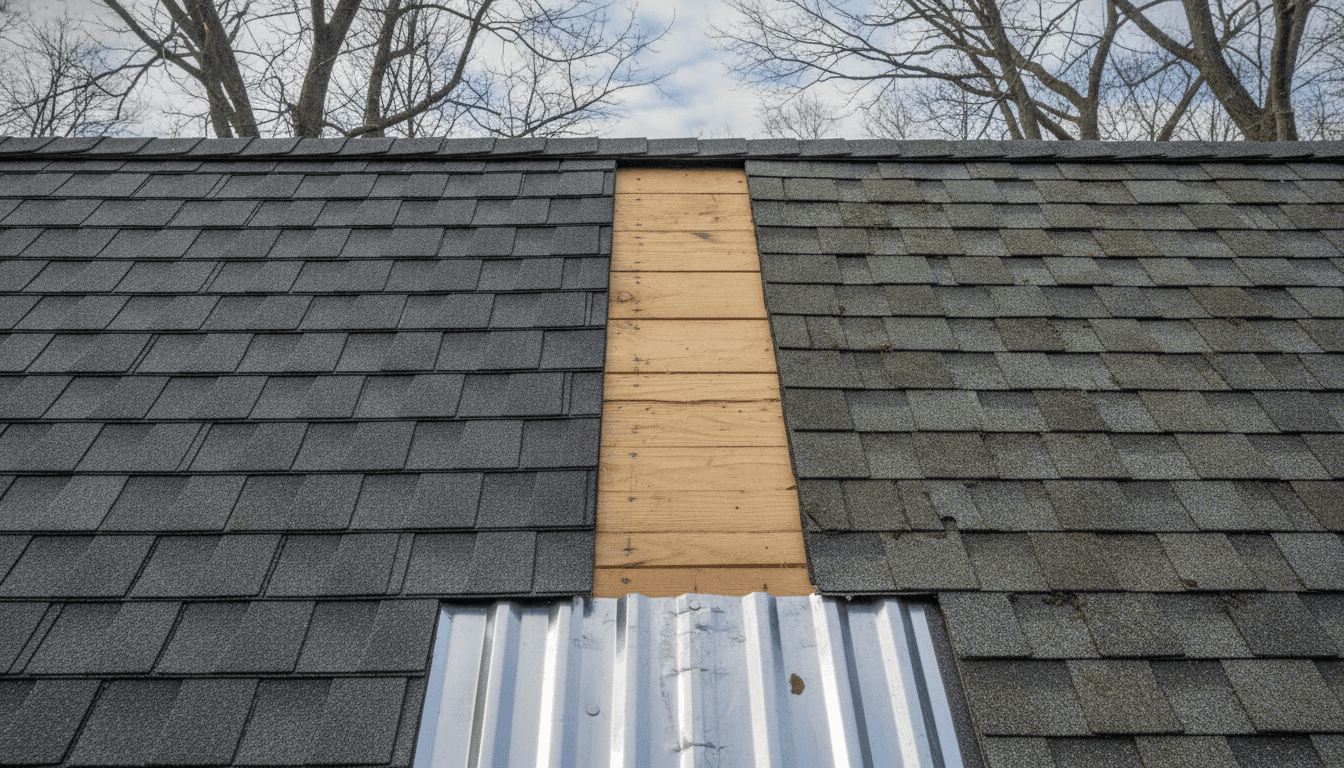
Rotten decking is the line item that turns a fixed bid into a variable one. Replacing plank sheathing on an older Dorchester or Roslindale home runs $70 to $140 per sheet of plywood installed, and a roof that has leaked at a valley for three winters can need eight or ten sheets. Get the per-sheet price in the contract before work starts.
What Drives the Number Beyond Roof Size
Pitch changes labor cost more than any other single factor. Anything above an 8/12 pitch requires roof jacks, staging, and slower movement, and the steep Victorian and Queen Anne rooflines around Dorchester and Roxbury carry a 20 to 40 percent labor premium over a simple gable.
Complexity is the next multiplier. Every dormer, valley, chimney, skylight, and roof-to-wall transition is a place water can enter, and each one needs its own flashing detail. A cut-up roof with four dormers costs more than a plain rectangle of the same square footage.
Access decides the rest. A triple-decker on a narrow street in Southie or East Boston with no driveway means the dumpster sits on the street under permit, materials get loaded by hand, and the crew works around parked cars. Suburban jobs in Newton or Milton with a driveway and side yard run cheaper for the same roof.
Height matters on the three and four-story buildings that fill the neighborhoods. Staging costs more, insurance costs more, and material handling takes longer, which is why the same 20 squares can price $4,000 apart across two addresses a mile from each other.
Ice Dams and What Massachusetts Code Requires
Ice dams form when heat escaping the living space melts snow on the upper roof, the water runs down to the cold eave, and it refreezes into a ridge that backs water up under the shingles. Boston gets the freeze-thaw pattern that produces them almost every winter, and the resulting ceiling stains are the most common roofing complaint in the city.
Massachusetts code requires an ice and water barrier membrane at the eaves, extending from the roof edge to a point at least 24 inches inside the exterior wall line. Reputable local roofers go further, running the membrane three to six feet up from the eave and into every valley, and that upgrade adds $400 to $1,200 to a job.
The membrane is only half the answer. Attic insulation and ventilation control the heat loss that creates the dam in the first place, so a roof replacement is the right moment to add soffit vents, a ridge vent, and insulation depth. Budget $1,500 to $4,500 for that work, and it often pays back in heating bills.
Snow load is the structural side of the same weather. Roof framing on older homes was sized before modern load tables, and a roofer who spots sagging rafters or a bowed ridge should send you to a structural engineer before laying new material over the problem.
Flat and Low-Slope Roofs on Triple-Deckers
The three-family flat roof is a Boston institution, and it is a different product from a shingle roof. EPDM rubber membrane is the common choice at $9,000 to $18,000 for a typical triple-decker roof deck, and TPO runs similar with a white surface that reflects summer heat.
Modified bitumen, torch-applied in two plies, costs $10,000 to $20,000 and holds up well on roofs with foot traffic. Older tar and gravel systems are what many of these buildings still carry, and once one starts leaking, patching becomes an annual expense rather than a fix.
Drainage is everything on a low-slope roof. Internal drains clog with leaves, scuppers ice over, and standing water finds any seam, so tapered insulation to move water toward the drains adds $2,000 to $6,000 and is worth the argument with a contractor who wants to skip it.
Roof decks change the scope. Many triple-deckers have a deck built on top of the membrane, and removing and rebuilding it adds $3,000 to $12,000. Confirm whether the bid includes deck removal or expects you to handle it.
Permits, Historic Review, and Hiring the Contractor
Roof replacement in Boston requires a building permit pulled through the Inspectional Services Department, and the contractor should pull it rather than asking you to. A homeowner who pulls the permit takes on the liability, which is exactly why some contractors suggest it.
Properties in Beacon Hill, Back Bay, the South End, Bay Village, and other designated districts need approval from the relevant historic commission before visible roof materials change. That review takes weeks and can require matching the original slate or metal, so start it before you sign a contract with a start date attached.
Massachusetts requires residential contractors to hold Home Improvement Contractor registration, and structural work calls for a Construction Supervisor License. Registration matters because it gives you access to the state's arbitration program and guaranty fund if the job goes wrong, and an unregistered contractor leaves you with court as the only option.
Compare three written bids that specify the same shingle line, the same underlayment, the same flashing metal, and the same per-sheet decking price. Sending an identical scope to three roofing contractors working in Greater Boston is how you find out whether a low number is efficiency or omission, and our Massachusetts home service cost guides apply the same method to other trades.
Common Questions About Boston Roof Replacement
How long does a roof last in the Boston climate?
Architectural asphalt typically gives 20 to 28 years here, shorter than its rating because of freeze-thaw and coastal wind. Slate runs 75 to 150 years with periodic flashing and fastener work, and EPDM membrane averages 20 to 30 years.
When is the best time of year to replace a roof?
Late spring through October gives the sealant strips the warmth they need to bond properly. Winter installation is possible with hand-sealing, though it costs more and most crews prefer to schedule around it.
Will homeowners insurance pay for my roof?
Insurance covers sudden damage from a storm or fallen tree, not wear-out from age. Ice dam water damage to interior ceilings is often covered while the roof replacement itself is not, so document everything with photos and dates.
Can I put new shingles over the old ones?
Massachusetts limits the number of roofing layers, and a second layer over existing shingles hides decking problems while shortening the new roof's life. On a Boston home with any leak history, tear-off is the honest answer.
How much does a roof repair cost instead of a replacement?
Targeted repairs run $450 to $2,500 for flashing, a small area of shingles, or a valley. A roof past 20 years with multiple leak points usually spends that money twice within three winters, which is when replacement math starts winning.